北京房价均降1万
连发三款自研芯片 先上自家顶级旗舰机!小米要与苹果折叠机正面交锋?_我的网站

一 |
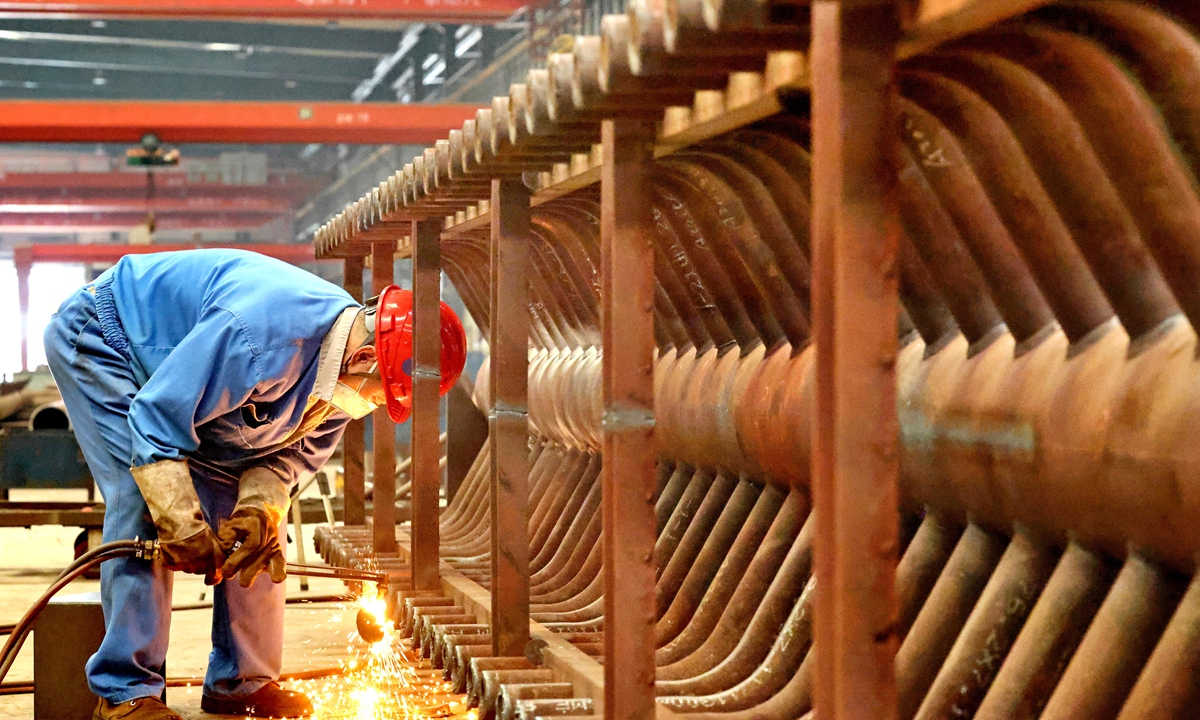
But what are the facts on the ground?
China's Ministry of Commerce recently released a document titled China's Position on the So-Called Excess Capacity Issue. Reviewing the evolution of the global capacity landscape from a historical perspective, it offers an objective analysis of how industrial subsidies, trade surpluses, economic imbalances and market competition relate to "overcapacity," sets out China's policy practices and the direction of its efforts, and puts forward China's ideas and proposals - a forceful response to the "China overcapacity" narrative.
Plainly, the argument that "China's inadequate domestic demand gives rise to excess capacity" rests on a logical sleight of hand - it takes a localized phenomenon at the micro level of the market and applies it wholesale to the structure of the macroeconomy, a picture far removed from reality.
China is not only a major manufacturing power but also a major consuming power. Domestic demand has long been the main engine of the Chinese economy.
To see through the logical fallacy of the "overcapacity" narrative, one must first be clear about where the Chinese economy actually sits in the global landscape.
In the course of economic globalization, China has actively integrated itself into the international division of industrial labor and become the "world's factory" in the truest sense. Chinese manufacturing has enriched the global supply of goods, lowered living costs for consumers in countries around the world, and played an important part in easing global inflationary pressure. But to define China simply as a "producer" on that basis, and from there to conclude that it suffers from "inadequate domestic demand and overcapacity," is a proposition that does not hold water.
From 2013 to 2024, domestic demand contributed an average of 93 percent to China's economic growth, with consumption and investment accounting for an average of 55 percent and 38 percent respectively. China's total retail sales of consumer goods rose from 23.8 trillion yuan ($3.53 trillion) in 2013 to 50.1 trillion yuan in 2025, doubling in size.
Measured at the World Bank's purchasing power parity rates, China's total retail sales of consumer goods in 2025 were 1.7 times those of the US, making the country the world's largest market for consumer goods in all but name. China today ranks first globally in the physical volume of goods consumed, and its per capita annual consumption of some industrial products already approaches the levels seen in developed economies.
China keeps expanding its domestic demand and is working toward a higher-level balance between supply and demand.
Growth in China's total retail sales of consumer goods has slowed somewhat in recent years, and some have taken this as proof of weak domestic demand. That reading is neither objective nor complete.
A strong domestic market provides strategic support for Chinese modernization. The outline of China's 15th Five-Year Plan (2026-30) period devotes a dedicated part to building such a market, stressing the need to adhere to the strategic focus of expanding domestic demand, to expand effective investment, to further implement special actions to boost consumption, to promote the expansion and upgrading of commodity consumption, to unleashing the potential of service consumption, to strengthening the foundation of residents' consumption and to continuously improve the consumption environment - using new demand to guide new supply, and using new supply to create new demand, so as to promote a virtuous cycle between consumption and investment, and between supply and demand, achieve a higher level of dynamic balance between supply and demand.
The slowdown in retail sales growth is consistent with China's shift from high-speed growth to high-quality development, and it also reflects the upgrading of the country's consumption structure. China's consumer market is moving faster from one dominated by goods toward one in which goods and services carry equal weight. Spending on services is growing rapidly and is expected to account for more than half of the total by 2030.
China's super-sized market is not only the bedrock of its own development but also a broad platform on which countries around the world can share in the dividends of that growth.
China has ranked as the world's second-largest importer for 17 consecutive years and is a major export destination for nearly 80 countries and regions. It has granted zero-tariff treatment to 63 countries and regions, becoming the first major economy in the world to extend full zero-tariff coverage to every African country and every least developed country that has diplomatic relations with it. It is also the only country to host an international import expo, having staged eight editions of the China International Import Expo with cumulative intended deals worth more than $580 billion. Over the 14th Five-Year Plan period (2021-25) period, China's cumulative imports topped 90 trillion yuan. These facts and figures show clearly that China is not just the "world's factory" but, still more, the "world's market."
Looking ahead, China's middle-income group is set to exceed 800 million people within little more than a decade, and per capita GDP is expected to reach the level of a moderately developed country. With vast room for consumption and ample potential and vitality, domestic demand will remain the main engine of China's economic development and will keep injecting strong momentum into world economic growth.
This was compiled and translated by the Global Times English edition based on an article published in the "Chisu Jinsheng" economic commentary column of the People's Daily on August 6, 2026.
。

二 | 还有小米之家门店工作人员介绍,Xiaomi 18 Fold正是此前没有做过的阔折叠机型。该机型友商定价动辄上万元。 这意味着,时隔近两年,小米的自研芯片终将走到高端机型上,等待用户考验。更为关键的是,从发布日期上看,小米此次或带着自家的自研芯片,与此前网传的苹果首款折叠屏手机“正面交锋”。

三 |  进军阔折叠 自研芯片将在自家高端机型上亮相 从8月24日到25日,小米创始人雷军连发了多条微博宣传自家的新款芯片。 这是小米时隔459天拿出的又一代自研芯片。从名称“玄戒O3”上看,小米直接跳掉了第二代。性能方面,玄戒O3延续了3nm制程,晶体管由前代190亿提升至240亿。CPU采用十核全大核设计、GPU首发G2-Ultra NX 图形处理器,性能提升85%,功耗降低64%,支持LPDDR6的移动处理器,带宽为113.8GB/s,相比玄戒O1提升了48%。 雷军还特意强调,玄戒O3的NPU架构全面重构,专为Xiaomi MiMo 端侧大模型而生,有200TOPS 张量算力、3.13TFLOPS 向量算力,将全模块“All in AI”。

四 | 总之,用雷军的话说,这是“前所未有的跨代式升级”。 商用进展方面,据雷军透露,三款芯片已完成全部设计和验证。

五 | 玄戒O3 已开启规模量产,小米玄戒O100和D100 已经研发完成,明年将正式商用,首款搭载玄戒O3 AI旗舰处理器的机型——Xiaomi 18 Fold预计将于9月上市。 值得强调的是,谈到应用,玄戒O1发布后一直有声音认为,小米长期与高通、联发科等厂商合作,固有的供应链体系很难在短时间内突破,且小米的自研芯片还要蹚过代工的河,消费者接受度也需培养,应用到自家高端机型上尚需时间。 让业内震惊的是,根据雷军的说法,首发搭载的机型——Xiaomi 18 Fold已经是小米18系列的顶级旗舰。也就是说,近两年时间,小米的自研芯片就搭载到了自家的高端机型上。不过,消费者的接受程度以及第一批市场反馈声音仍有待验证。 8月24日下午,《每日经济新闻》记者在电商平台看到,Xiaomi 18 Fold已经可以预约,但外观和价格尚未发布。同日,有小米之家门店工作人员介绍,Xiaomi 18 Fold已经可以开始交订金,订金为100元,不买可退,机型正是此前没有做过的阔折叠(一种折叠屏手机的设计形态,核心特征是内屏展开后比例更宽,通常为16:10或接近4:3)。

六 | 今年4月25日,华为发布Pura X Max,也是行业首款阔折叠屏产品。今年7月22日,三星电子正式发布新一代Galaxy Z系列折叠屏手机,其中三星Galaxy Z Fold8为阔折叠产品,售价12999元/台起。截至发稿,除上述两家厂商外,还未有手机厂商推出阔折叠真机产品。

七 | 不过,业内一直有消息称,苹果或将在9月发布首款折叠屏手机,机型就是阔折叠。

八 | 这意味着,继华为、三星之后,小米将加入阔折叠机型大队。更为关键的是,从发布日期上看,小米此次或将带着自家的自研芯片,与此前网传的苹果首款折叠屏手机“正面对抗”。

九 | 还有两芯 可应用至汽车、机器人等领域 除了玄戒O3,小米此次还一口气发布了两款芯片:玄戒O100和玄戒D100。其中,玄戒D100是国内首款3nm智驾高算力AI芯片,也是3nm工艺,20核CPU与16核NPU组合,最高可支持160GB统一内存,可本地部署200B参数量超大模型。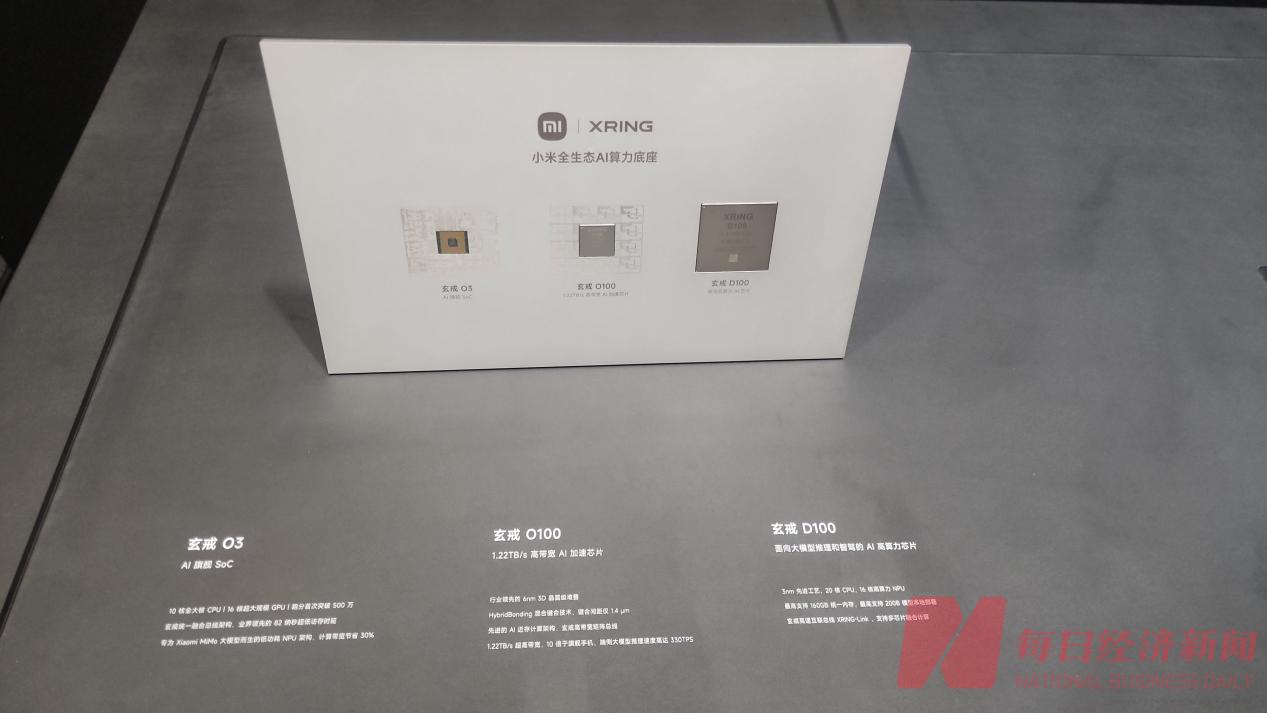 三款小米芯片图片来源:每经记者杨卉摄 玄戒O100则是小米首颗专为端侧大模型研发的高带宽AI加速芯片,配有6nm晶圆级垂直堆叠(Wafer on Wafer)先进封装,采用 Hybrid Bonding混合键合工艺,可实现1.4微米键合间距。 小米集团副总裁、新业务部总裁朱丹告诉《每日经济新闻》记者,其实小米很早就观察到,在“All in AI”的时代下,大家对算力的要求是高能效和大带宽,但实际带宽的增长其实远滞后于算力的增长和模型尺寸的增加。这也是小米选择Wafer on Wafer等技术和大升级的原因。

十 | “大家知道,一个芯片的开发周期至少三年以上。其实去年O1发布的时候,我们的O3都有图片了。这么多的升级下来之后,我们也很有信心说今年跟大家做的旗舰都去比一比。”朱丹称。

十一 | 另外,小米还在发布现场展示了搭载新一代玄戒芯片的两款原型机,包括高速AI演示终端和个人AI超级计算终端。《每日经济新闻》记者在现场注意到,搭载玄戒O100的高速AI演示原型机取消了传统手机影像模块,搭载主动风冷散热系统,内置的Xiaomi MiMo端侧大模型推理速度可达到每秒295 tokens。另一台AI Cube原型机则主要用来验证玄戒O3、O100、D100三颗芯片协同工作并支持本地部署大模型的工程可行性。展台工作人员还进行了本地应用生成演示,可在3分钟至5分钟内完成一个小程序的生成。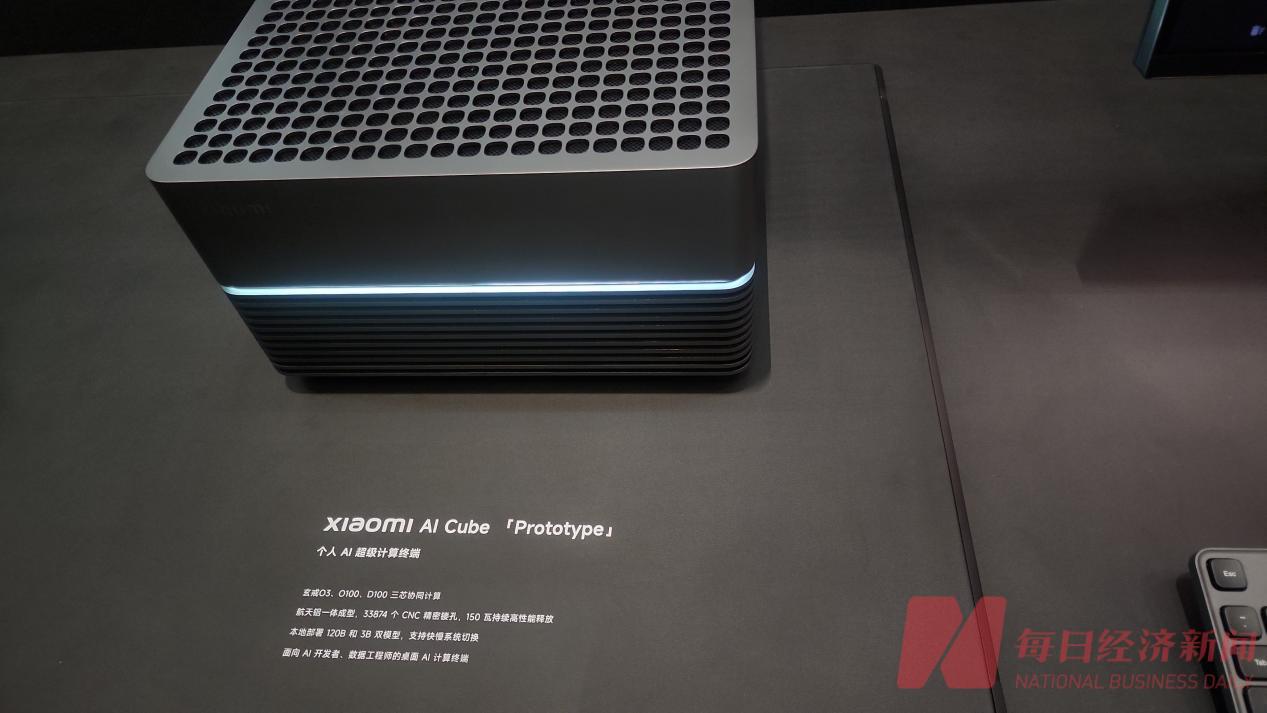 小米展示的个人AI超级计算终端图片来源:每经记者杨卉摄
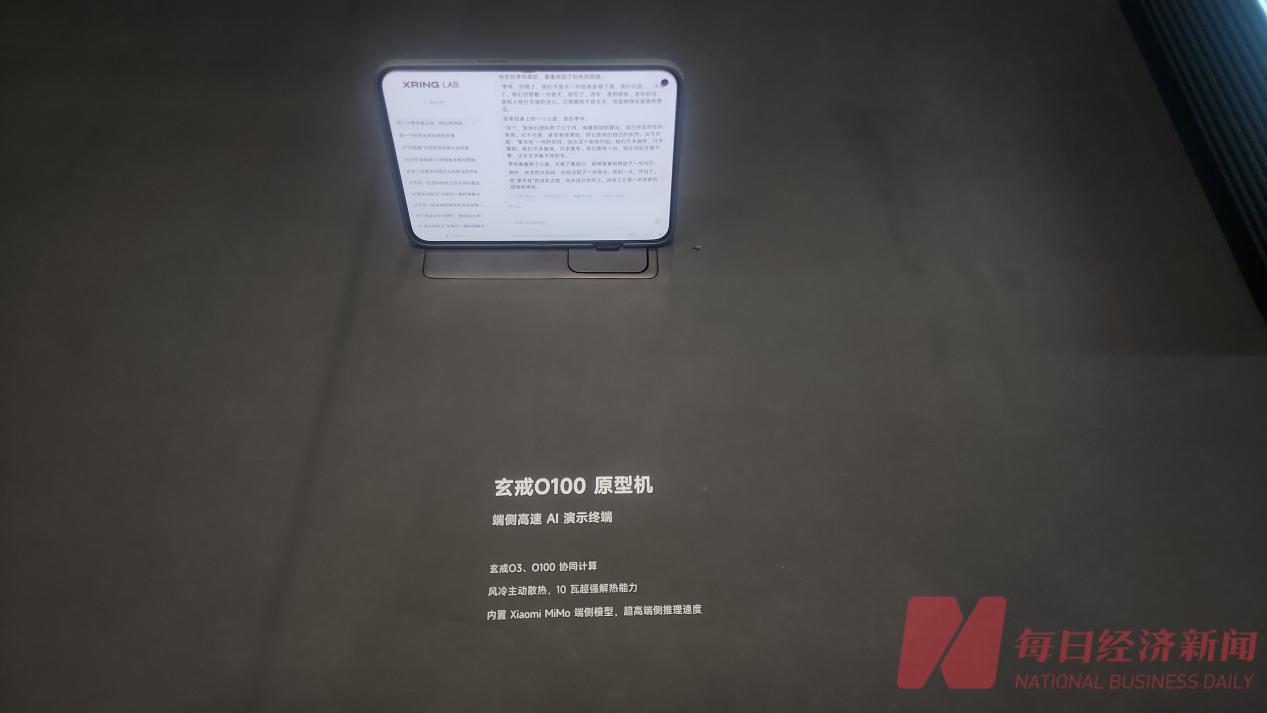 小米展示的玄戒O100原型机图片来源:每经记者杨卉摄 值得注意的是,从应用场景上看,根据小米方面的说法,此次发布的玄戒系列芯片可在手机、机器人、汽车等领域应用。对小米来说,应用到智驾几乎是顺理成章,但机器人和背后的想象空间,则是小米最近的新动态。 自2022年发布全尺寸人形机器人“铁大”后,小米几乎淡出了这一热门赛道。然而,就在刚刚结束的2026世界机器人大会上,《每日经济新闻》记者看到了小米的下一代人形机器人真机。该款机器人身高约1.70米,体重66公斤,全身有66个自由度,其中一半自由度集中在手部,目前仍处于样机阶段。

十二 | 在业内看来,从手机到汽车甚至到机器人,小米的一系列自研芯片算是补齐了最后一块拼图,不仅能避免被贴上“依赖进口”的标签,在需求激增的市场应对供应链风险,还有望进一步扩大“人车家生态”的产业链。(文章来源:每日经济新闻)。
Current article:http://wh5.foujiongwenruapoumeizhan.buzz/vavx9ga/edvkotw.html
Published on:21:33:33